The Ramblings of a Fly Fisherman

North Platte River - Wyoming

I finally made the North Platte trip a reality. What can I really say about it? Matt and I took the float from Bennett Peak to Saratoga staying the night on Treasure Island. The trek is approximately 24 miles long. This area of Wyoming is absolutely beautiful and the river was easily navigated for a novice such as myself. Fishing was a little slow in the beginning, but I attribute that to our unfamiliarity with the river and the wind… boy was the wind bad the first day! For the first few miles, we saw lots of surface activity from trout. Most were targeting Caddis, but as the Green Drakes started to arrive to the party, the attention soon turned in their direction.


On the second day, we started out a little earlier and the temperature was quite a bit colder. The magic combination seemed to be a Pat’s Rubber Legs in tandem with a size 14 Prince. Once we tied this up, nearly every deep seam appeared to result in a nice hookup. Most of the trout that we caught were in the range of 16+ inches with one breaking off, that we only saw briefly at the surface, that appeared to be in the 25 inch range. I am sure as time passes and that story gets told a few more times, he will grow even more.


My Trip to the Frying Pan

I visited the Frying Pan River over the weekend with my friends Matt, Connor, and Adam. First of all, the scenery was beautiful. The water was perfectly clear and running at 95cfs, the surrounding cliffs were unforgettable, and the weather could not have been better for fly fishing. After a night of limited sleep suffering through Adam’s snoring, we hit the water at about 9:30am. Things started out slow initially, but after a few hours, we began to get a little activity in the pocket water lining the river on the opposite bank from the road, no doubt attributed to the quickly rising temperatures in the area. After seining a few spots and experimenting with a hand-full of patterns, I was able to start enticing trout to my line using the rojo, CDC pheasant tail, and a bead-head zebra midge. Nymphing these patterns showed some limited success, but the river bottom itself was so covered in silt and algae in most areas, you would actually spend more time cleaning your flies than fishing your lane. Using a dry-dropper was far more effective and allowed for a more variable presentation at the bottom by doing nothing more than changing the dropper length based on the area being targeted.


Overall, we caught about 30 trout all together. We caught both browns and rainbows ranging in size from 10 to 19 inches. I would call that a successful trip and a fun weekend out with the guys. I hope to do this again soon!

Eleven Mile Canyon

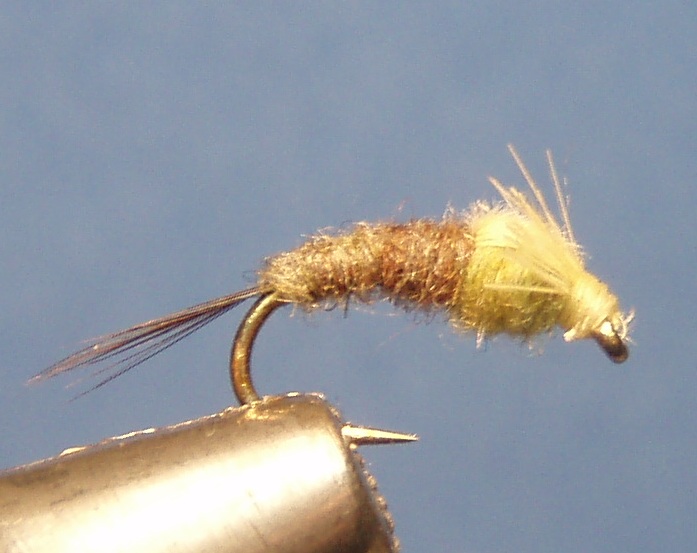
This was my first time out fly fishing this year. Alyssa and I headed down to Eleven Mile Canyon to see how conditions this time of year would be and to try our luck using a few new patterns that I tied over the winter. What I liked most about this trip was the fact that not only did we catch some nice trout, but we nearly had the whole place to ourselves. The best producer by far during this trip… The Barr’s Emerger!


I have read a lot over the winter about the Barr’s Emerger. It is a pattern originally created by John Barr and is intended to imitate a partially developed dun. I didn’t see a lot of surface activity this weekend, but after seining the water, I did discover many varieties of mayflies floating though the water column nearing this stage of development. After tying one on and allowing a mid-column drift, it was clear what the trout were focusing their efforts on. This remained relatively consistent throughout the day.

The Barr's Emerger


Cutbow at Eleven Mile Canyon

The Rogue Stone

It has been a while since my last post, so I figured I would start updating you on my latest creations. Since winter set in, I have been refilling my fly boxes that had become greatly diminished throughout the summer and fall due to the many trips around the state. Alyssa and I visited the Taylor where we spent some time hooking up with several nice rainbows and browns. We also fished the Big Thompson, the South Platte, Clear Creek, and Bear Creek. These are all great areas here in Colorado! However; let’s not forget our time meandering through the Great Smoky Mountains in Tennessee where the fish may not have been monsters, but the tranquility and solitude that the area provided more than made up for the lack of trophy trout available for us. Overall it was a great season!


Let’s see… While tying a few hoppers, I realized that I had never tied any salmon flies and this is odd because it is a hatch that I love to fish. When these bugs are on, the river comes alive with activity and you feel almost as if you are in a Wild West shoot out as you cast toward so many aggressively feeding trout. The pattern that I started working on is called the Rogue Stone. This is a great fly to fish and it follows my theme of practicing more extended body patterns.

This pattern was originally created by Jack Schlotter as a durable imitation of the black stone flies he witnessed in his local town of Medford, Oregon. There are many different adaptations to this pattern, but some of the most recent that I have fished actually alter the wing to look more damaged or splayed adding to the realism. After all, stone flies don’t often land on the surface of the river with their wings perfectly folded, but rather they appear spread out and sometimes even stuck within the surface film. Add a little color variation and blacken the last segment to imitate a cluster of eggs and you have a fly that will reap havoc anywhere salmon flies are being targeted.


Extended Body - Deer Hair

After working to improve many of my tying techniques this summer, I decided to try creating some extended body patterns, a challenge that I had not yet faced.  There are really three basic materials that are used extensively by most tyers to create this look; foam, deer hair, and dubbing.  After researching various patterns that incorporate this technique and consulting with a few other tyers, I decided to start with deer hair as this material lends itself well to larger mayfly recipes. 

One of the most common deer hair extended bodied patterns that I have run across is the Paradrake.  Below is my third attempt.  This fly was moderately challenging as I initially had a difficult time determining the right amount of deer hair to use to create a proportionate body. 
Paradrake

After tying a few of these, I decided to incorporate another technique that I had been reading about that introduced the use of a needle and would require the construction of the fly to be done in the reverse order.  I liked this adaptation as it created a more delicate representation which could more aptly be applied to various mayfly species.
Using a needle to create the body was easy.  Just remember to coat the needle in dubbing wax as this will allow you to remove the form once the construction is complete.
Modified Paradrake


Ant Patterns

I stayed home sick today, but it didn’t take too long, once my head started to clear, to get inspired to visit the tying bench and spin up a few bugs that were missing from my fly box.  Ants are a pattern that I probably do not fish enough.  In the past, I have found them difficult to track on the surface and I have never been in a situation where these appeared to be the patterns that the trout were specifically targeting.  However, after talking to a few friends over the last year, I have come to realize that this is a must have pattern for any fly fisherman.  Many reports have indicated that trout will often take ant patterns during the late summer months even in the middle of prevalent mayfly hatches.  The key to getting consistent strikes on an ant pattern is going to be size.  Keep a few different sizes and colors in order to vary the presentation. You will want to vary that presentation when you see a trout take interest, but turn away at the last second.  Ant patterns will likely fish better near stream edges unless you are using a flying ant pattern.  This variation will do well anywhere that trout may reside, even in high mountain lakes.   In order to improve the visibility of an ant pattern, tie it with a post similar to a Parachute Adams; just keep the post small in order to avoid disrupting the profile.

 Below is a flying ant that I tied today.  I used a yellow CDC feather for the wing in order to add some additional buoyancy, and because I have actually not seen one tied with this feather before.

The Rubber Leg Stone

The Rubber Leg Stone has a ton of variations.  It is a simple pattern for the novice and is highly effective during the summer, especially during periods when the rivers are running a bit higher.  I have used this pattern on the Big Thompson, South Platte, and Taylor rivers and in all cases, was able to hook into some nice trout.  It is more of an impressionistic imitation, so avoid slower water as this fly may not catch the attention of fish that live in higher pressured areas.  The most effective presentation that I have experimented with has been in moderately fast seams where the primary river current meets the edge of a slower moving section of water.   This fly also acts as a great attractor pattern in a nymph rig.  Many times I have used this as the front fly attaching many different kinds of midges behind it approximately 18 to 24 inches depending on water conditions.  Just this past weekend, I was fishing the rubber leg stone in tandem with a blue poison tung right at dusk on the Taylor.  The large silhouette created by the stone and the blue color of the midge that was clearly apparent to the trout in this low-light condition, proved to be irresistible.


The Rubber Leg Stone