The Ramblings of a Fly Fisherman

Tying Some Poppers

I have been asked by a few of my bass fishing friends and family to tie up a few popper patterns so they can hit the St. Marks and Wakulla Rivers back near my home town of Tallahassee. I haven’t really tied a lot of poppers as I spend most of my time fishing the rivers and streams here in Colorado. However; I found it to be a nice deviation from the techniques, tools and materials that I normally utilize when sitting down at my tying bench. Tying foam poppers gives you the opportunity to work with various paints, epoxy, and stencils in order to make, well really anything that you can think up at the time. What I have created here, while not flashy or amazing, was still a lot of fun.

One bit of advice that I learned through trial and error was when working with epoxy. Getting a nearly perfect 50/50 ratio when mixing the two parts is really important. Failure to do this will lead to a coating on your popper that seems to never dry completely, it just feels tacky to the touch. There were really two tricks that seemed to work well for me. One, you can purchase epoxy mixing cups from your local hobby store. These cups allow you to measure the two parts before beginning the mixing process keeping the ratio nice and even. Two, on a piece of paper, use a stencil to create two circles of the same size. Fill one circle with the resin and the other with the hardener. Once each side fully fills your circles, you have equal parts and can begin mixing.

Oh, another good practice you should observe deals with the mixing itself. Whatever tool that you are using to mix your epoxy, be sure to never lift it out of the mixture as you are stirring. Doing so will trap air bubbles in the epoxy making it really difficult to get a nice glassy finish.

As far as painting supplies, you can really paint your poppers with any of the acrylic paints found at any hobby store. However, I did run across an interesting airbrushing tool that I think works great for this type of application. It’s called a Copic Airbrush. Instead of mixing paints and having parts to clean after every use, all you have to do with this system is load the next marker. It does use specific markers for the system, but the ease of use really caught my interest and after experimenting with the system, I am already thinking about all the other possibilities that I could use this for in my fly tying. Go to http://www.copicmarker.com for more information.

Here are a few of my creations from this weekend


BFC Meeting - Fly Fishing RMNP

Recently, I attended the Boulder Fly Caster’s meetup group at the Boulder REI to listen to a presentation given by Steven Schweitzer on fly fishing Rocky Mountain National Park. I think that Steve’s presentation was excellent as he covered some of the caveats of hiking this area, equipment needed, and some of the lesser known nuances of park fly fishing. I was so impressed with the presentation, I decided to go ahead and pick up his book for my own review. So far, I think that it is highly detailed and certainly a MUST read for anyone seriously interested in exploring the park with the intent on casting a fly rod. Interestingly enough, he even includes a small section on tenkara fishing stating that RMNP has become the “epicenter” for this style. That is good to know as I am exploring this style myself now and it is nice to know that we have such a great area for it so near to home.


For more information on Steven Schweitzer and his book “A Fly Fishing Guide to Rocky Mountain Park”, please visit  www.flyfishingRMNP.com

Tenkara


While searching for some unique Christmas gift ideas this season, I ran across information on a method of fly fishing that I was unfamiliar with until now. It is called Tenkara. It is a method of fly fishing hundreds of years old and utilized in the high mountain streams of Japan. This method uses only a fly rod, a leader, some tippet and a fly - notice that I didn’t list either a reel or any fly line. It is marketed here in the US as a simpler style of fly fishing and at this point seems to be targeting back-country hikers and campers. The rods collapse into a small space and the gear requirements are minimal. Traditionally, this type of fly fishing focuses more on the quality of the presentation rather than the fly making it possible to carry only a few patterns or maybe even just one. The flies themselves I also found interesting as they are a clear deviation from the patterns that I have become accustomed to tying.

For more information, please visit www.tenkarausa.com and www.tenkaratalk.com

Here are a few of the flies that I have put together so far. Tenkara patterns are not required to be complex and were often constructed from any available materials that the fisherman had at his disposal. For me, I just couldn’t help but add a little flair to make my time at the bench more interesting.


North Platte River - Wyoming

I finally made the North Platte trip a reality. What can I really say about it? Matt and I took the float from Bennett Peak to Saratoga staying the night on Treasure Island. The trek is approximately 24 miles long. This area of Wyoming is absolutely beautiful and the river was easily navigated for a novice such as myself. Fishing was a little slow in the beginning, but I attribute that to our unfamiliarity with the river and the wind… boy was the wind bad the first day! For the first few miles, we saw lots of surface activity from trout. Most were targeting Caddis, but as the Green Drakes started to arrive to the party, the attention soon turned in their direction.


On the second day, we started out a little earlier and the temperature was quite a bit colder. The magic combination seemed to be a Pat’s Rubber Legs in tandem with a size 14 Prince. Once we tied this up, nearly every deep seam appeared to result in a nice hookup. Most of the trout that we caught were in the range of 16+ inches with one breaking off, that we only saw briefly at the surface, that appeared to be in the 25 inch range. I am sure as time passes and that story gets told a few more times, he will grow even more.


My Trip to the Frying Pan

I visited the Frying Pan River over the weekend with my friends Matt, Connor, and Adam. First of all, the scenery was beautiful. The water was perfectly clear and running at 95cfs, the surrounding cliffs were unforgettable, and the weather could not have been better for fly fishing. After a night of limited sleep suffering through Adam’s snoring, we hit the water at about 9:30am. Things started out slow initially, but after a few hours, we began to get a little activity in the pocket water lining the river on the opposite bank from the road, no doubt attributed to the quickly rising temperatures in the area. After seining a few spots and experimenting with a hand-full of patterns, I was able to start enticing trout to my line using the rojo, CDC pheasant tail, and a bead-head zebra midge. Nymphing these patterns showed some limited success, but the river bottom itself was so covered in silt and algae in most areas, you would actually spend more time cleaning your flies than fishing your lane. Using a dry-dropper was far more effective and allowed for a more variable presentation at the bottom by doing nothing more than changing the dropper length based on the area being targeted.


Overall, we caught about 30 trout all together. We caught both browns and rainbows ranging in size from 10 to 19 inches. I would call that a successful trip and a fun weekend out with the guys. I hope to do this again soon!

Eleven Mile Canyon

This was my first time out fly fishing this year. Alyssa and I headed down to Eleven Mile Canyon to see how conditions this time of year would be and to try our luck using a few new patterns that I tied over the winter. What I liked most about this trip was the fact that not only did we catch some nice trout, but we nearly had the whole place to ourselves. The best producer by far during this trip… The Barr’s Emerger!


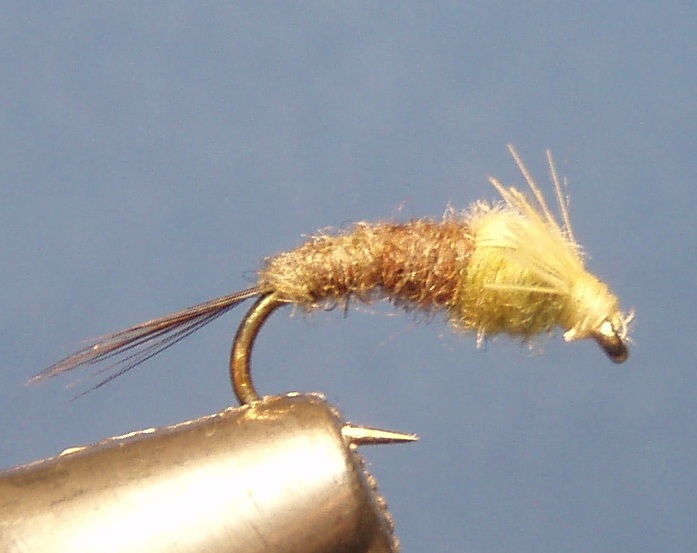
I have read a lot over the winter about the Barr’s Emerger. It is a pattern originally created by John Barr and is intended to imitate a partially developed dun. I didn’t see a lot of surface activity this weekend, but after seining the water, I did discover many varieties of mayflies floating though the water column nearing this stage of development. After tying one on and allowing a mid-column drift, it was clear what the trout were focusing their efforts on. This remained relatively consistent throughout the day.

The Barr's Emerger


Cutbow at Eleven Mile Canyon

The Rogue Stone

It has been a while since my last post, so I figured I would start updating you on my latest creations. Since winter set in, I have been refilling my fly boxes that had become greatly diminished throughout the summer and fall due to the many trips around the state. Alyssa and I visited the Taylor where we spent some time hooking up with several nice rainbows and browns. We also fished the Big Thompson, the South Platte, Clear Creek, and Bear Creek. These are all great areas here in Colorado! However; let’s not forget our time meandering through the Great Smoky Mountains in Tennessee where the fish may not have been monsters, but the tranquility and solitude that the area provided more than made up for the lack of trophy trout available for us. Overall it was a great season!


Let’s see… While tying a few hoppers, I realized that I had never tied any salmon flies and this is odd because it is a hatch that I love to fish. When these bugs are on, the river comes alive with activity and you feel almost as if you are in a Wild West shoot out as you cast toward so many aggressively feeding trout. The pattern that I started working on is called the Rogue Stone. This is a great fly to fish and it follows my theme of practicing more extended body patterns.

This pattern was originally created by Jack Schlotter as a durable imitation of the black stone flies he witnessed in his local town of Medford, Oregon. There are many different adaptations to this pattern, but some of the most recent that I have fished actually alter the wing to look more damaged or splayed adding to the realism. After all, stone flies don’t often land on the surface of the river with their wings perfectly folded, but rather they appear spread out and sometimes even stuck within the surface film. Add a little color variation and blacken the last segment to imitate a cluster of eggs and you have a fly that will reap havoc anywhere salmon flies are being targeted.